
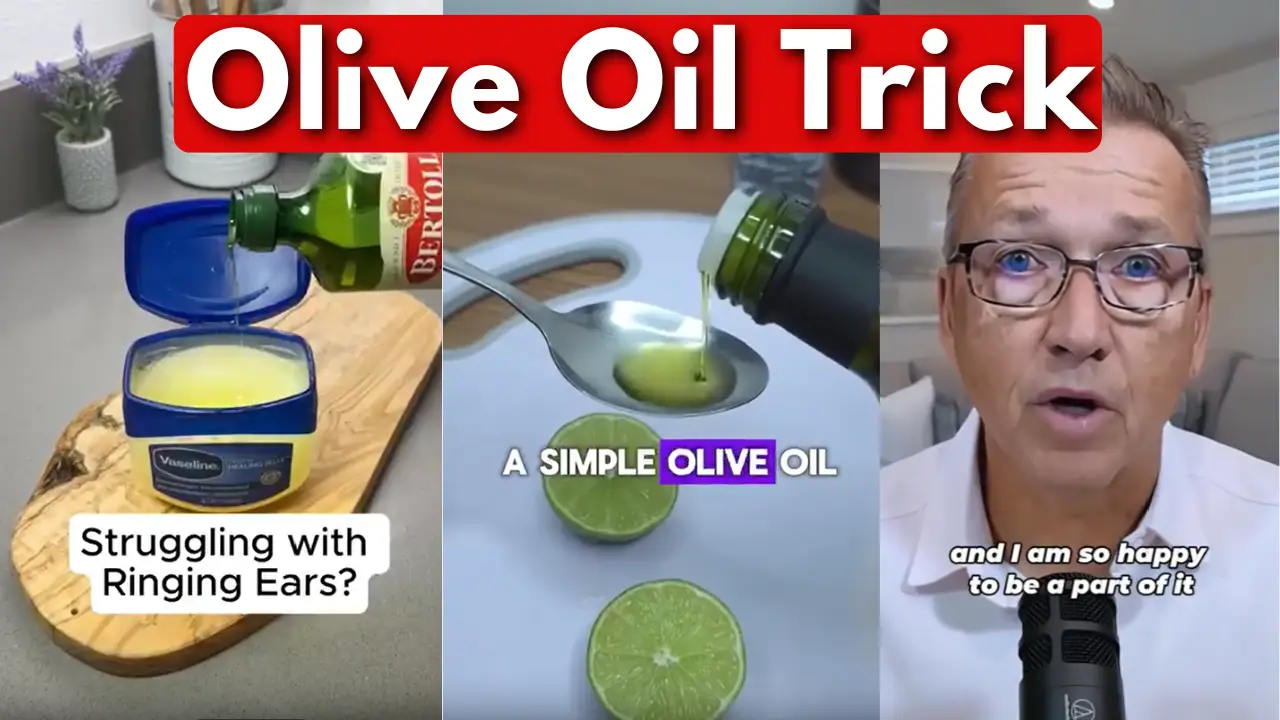
Tinnitus can feel overwhelming. The constant ringing, buzzing, or humming that never seems to stop can interfere with sleep, concentration, emotional health, and even day-to-day peace. Because there is no instant medical cure, people across the world often turn to home remedies, online tips, and natural approaches hoping for relief. One of the most popular trends circulating on social media today is something widely referred to as “olive oil trick.”
This so-called trick is presented in viral ads and videos as a breakthrough discovery—something simple, natural, and “secret” that supposedly silences tinnitus by targeting the root cause deep in the brain. Some ads go as far as saying this method was uncovered by Harvard scientists, hidden by big industries, or used in ancient villages where “nobody gets tinnitus.”
These claims sound dramatic, fascinating, and hopeful. But what exactly is this olive oil trick? How does it claim to work? And most importantly, does any of it align with actual science?
This article takes a detailed, well-researched look at the olive oil trick, its ingredients, the red flags behind the claims, and the real truth about tinnitus according to current medical understanding.
What Is the Olive Oil Trick?
Although the name “olive oil trick” sounds simple, the ads describing it usually contain a long storyline. They often begin with a dramatic personal account, a desperate search for help, and a doctor or researcher who claims to have discovered a natural technique that can supposedly restore silence in just weeks.
The method is usually described as a daily ritual involving:
- olive leaf extract (sometimes prepared as tea)
- olive oil or a concentrated olive compound
- an additional herbal ingredient such as Bacopa monnieri
- a warm drink or a capsule based on these components
The core message is that this mixture can detoxify the brain, reduce inflammation in the nerves, rebuild damaged auditory pathways, and bring relief from tinnitus.
The foundation of the trick usually rests on one of two ideas:
- Drinking olive leaf tea every morning to “cleanse toxins” and “calm nerve pathways.”
- Taking a combination of olive leaf extract and Bacopa, which is marketed as a formula to repair the auditory system.
Some ads call it a “forgotten Mediterranean ritual.” Others describe it as a “scientifically validated discovery” that was somehow suppressed. But in almost every version, the trick leads to a supplement being sold at the end of the video.
To understand why these claims appear convincing, we need to look closely at the ingredients.

The Ingredients Included in the Olive Oil Trick
The formula described in these ads usually revolves around two main components. These ingredients DO exist in the real world—but the claims attached to them are often exaggerated far beyond what science supports.
Olive Leaf Extract
Olive leaf extract is made from the leaves of the olive tree. It contains compounds such as:
- oleuropein
- antioxidants
- polyphenols
In the ads, it is described as a natural solution that can perform tasks far beyond its known abilities. Advertisers claim that olive leaf extract:
- removes heavy metals from the brain
- calms inflammation in the trigeminal nerve
- restores hearing signals
- reduces ringing caused by “damaged neurons”
Although olive leaves have antioxidant properties, there is no scientific evidence that they can perform detoxification inside the brain, repair nerve pathways, or reverse tinnitus.
Bacopa Monnieri
The second main ingredient is Bacopa monnieri, a plant used in traditional Ayurvedic practice. Bacopa is known for possible benefits related to:
- memory support
- mental clarity
- occasional stress management
But in the context of the olive oil trick, Bacopa is promoted as something far more powerful. The ads typically claim it can:
- rebuild damaged neural connections
- fix auditory pathways
- regenerate brain tissue harmed by tinnitus
- restore lost memory in people whose tinnitus is “destroying their brain”
While Bacopa has been studied for general cognitive support, it has never been proven to rebuild nerves or reverse tinnitus symptoms.
Red Flags Behind the Olive Oil Trick
The olive oil trick is usually presented in a long video advertisement filled with dramatic statements. Many of these videos share the same concerning patterns.
Below are six major red flags, placed as one of the article’s point sections, as requested:
1. Unverifiable or fictional medical experts
The ads frequently present a doctor “Dr. Michael Harrington” with impressive titles—chief neurosurgeon, head of otolaryngology, or Harvard brain specialist.
But when checked, these names do not appear in university directories or medical licensing databases. Also, when Searching name of this doctor on google, there are all sponsored results, No profile of doctor and No image appeared.

2. Saying Tinnitus Is Caused by “Cadmium Poisoning of the Trigeminal Nerve”
The ad claims tinnitus is caused by:
- “Cadmium chloride poisoning”
- “Inflammation of the trigeminal nerve”
There is no scientific evidence that cadmium causes tinnitus in the general population, and the trigeminal nerve is not the primary tinnitus pathway.
This is a classic tactic: invent a new fake root cause, then sell the “only cure.”
3. Claiming Supplements Can “Eliminate Brain Toxins” and “Reverse Neuron Damage”
They say the product can:
- Remove cadmium from the brain
- Rebuild neurons
- Restore memory
Supplements cannot cross the blood–brain barrier to detox heavy metals.
This is biologically impossible the way they describe it.
4. Claims That the Product Is “FDA-Certified”
There is no such thing as FDA-certified supplements.
No, the FDA does not certify or approve dietary supplements for safety and effectiveness before they are marketed. Companies are responsible for ensuring their products are safe and their claims are truthful, and the FDA regulates them through post-market actions, like removing dangerous products from the market and enforcing labeling regulations.

5. What Supplement Are They Promoting?
All versions of the “olive oil trick” advertisement eventually lead to one product: NeuroSilence.
The entire long story about brain toxins, nerve inflammation, Greek villages, and hidden research is designed to funnel viewers toward purchasing this supplement. The ad frames NeuroSilence as the “final result” of decades of research, claiming it can:
- reduce the ringing in the ears,
- cleanse heavy metals from the brain,
- repair nerve pathways, and
- restore clarity and focus.
The ad also repeatedly stresses that it is “100% natural,” “safe,” and based on “breakthrough scientific discoveries.”
But when the emotional narrative is stripped away, the supplement itself is simply a blend of olive leaf extract and Bacopa monnieri, sometimes with a few additional herbal extracts.
6. User Reviews Raises Concerns
Many Facebook users say the supplement is confusing, overpriced, and ineffective, with several reporting they were charged more than expected and could not contact support afterward.
Some people were unsure if it was a liquid or capsule because the name is used for different products. Others said the long video—featuring actors and big claims—felt manipulative, and multiple commenters openly described the product as a waste of money.
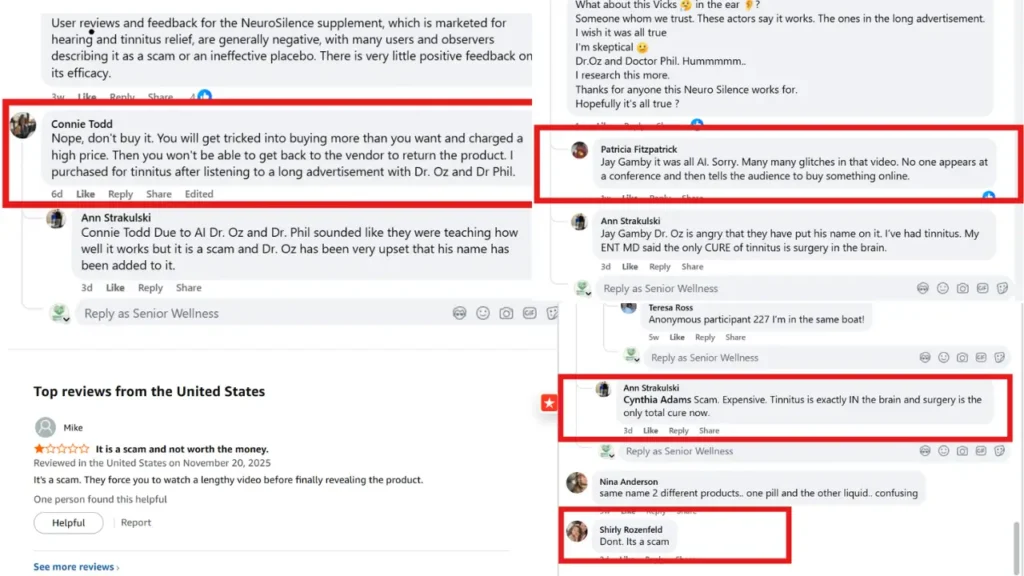
Several users said they hadn’t found success, while others wanted to wait because no one they knew had real results. Many expressed frustration that the advertisement relies on emotional stories and celebrity appearances, making them skeptical.
Scientific Truth About Tinnitus
To understand why these claims are misleading, it’s important to look at what science actually knows about tinnitus. Tinnitus is not a disease itself—it is a symptom. It is essentially the brain’s reaction to reduced or distorted sound signals.
This can happen due to:
- age-related hearing changes
- noise exposure over time
- ear conditions
- stress and anxiety
- neurological processing adjustments
- medical conditions such as high blood pressure
- issues in the auditory pathways
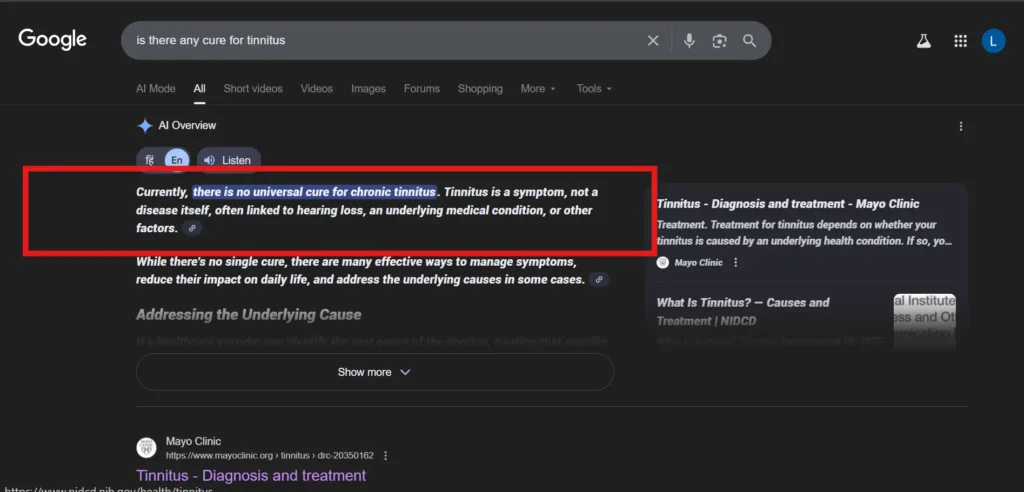
The ringing or buzzing that people hear is not caused by toxins, metal accumulation, or nerves that need to be “flushed” with herbal drinks.
Instead, tinnitus involves how the brain reacts to missing sound frequencies. When certain sound signals become weaker, the brain tries to compensate by increasing internal neural activity—creating the illusion of sound.
Current research indicates:
- tinnitus cannot be permanently shut off with a simple tonic
- there is no universal root cause
- supplements have not been proven to reverse it
- detoxing heavy metals does not apply to most tinnitus cases
This does not mean tinnitus cannot improve. It simply means the explanations given in olive oil trick ads do not match scientific reality.
Do Olive Oil or Olive Leaf Extract Cure Tinnitus?
No clinical evidence shows that olive oil or olive leaf extract can cure tinnitus.
Olive oil is known for:
- supporting heart health
- providing healthy fats
- antioxidant properties
But it does not cross the blood-brain barrier to remove heavy metals or repair auditory systems.

Olive leaf extract carries antioxidants, and antioxidants are part of general wellness. But antioxidant activity is not the same thing as:
- neural regeneration
- toxin removal
- tinnitus reversal
- nerve pathway repair
These claims exceed what olive compounds are capable of.
Why These Ads Are So Convincing
These advertisements succeed because they combine several persuasive techniques:
- emotional storytelling
- personal suffering turning into hope
- dramatic “breakthrough science”
- appeals to natural traditions
- warnings that traditional doctors are missing something
- creating urgency by saying the video is “in danger of being taken down”
This structure is designed to make viewers feel they are learning a hidden truth. It blends scientific language with personal struggle in a way that feels very relatable.
The emotional weight of tinnitus is real. People who struggle with constant ringing often feel desperate for silence, making them far more vulnerable to powerful narratives.
The Real Ways People Find Relief from Tinnitus
Even though there is no instant cure, many people manage their tinnitus effectively with methods supported by modern science. These often include:
- stress reduction
- hearing evaluation
- sound therapy
- cognitive behavioral therapy for tinnitus
- lifestyle adjustments
- addressing underlying issues such as blood pressure or earwax buildup
- improving sleep quality
- avoiding loud noise exposure
These approaches help the brain respond differently to the ringing, reducing its intensity and making it less intrusive over time.
The brain is adaptable, and while tinnitus may not disappear instantly, many people notice meaningful improvement when they follow well-supported approaches.
Final Thoughts
The olive oil trick is presented online as a simple, surprising ritual capable of reversing tinnitus, repairing nerves, restoring silence, and protecting brain health. Its storyline involves dramatic research claims, emotional personal stories, ancient traditions, and urgent warnings designed to push viewers into believing in a powerful natural breakthrough.
However, when the claims are examined carefully, several undeniable facts emerge:
- The medical credentials in these stories do not match real-world records.
- The studies described cannot be located in any scientific database.
- The “root cause” explanations do not align with established neuroscience.
- The ingredients, while real, do not have the abilities claimed in these videos.
- Tinnitus is a complex neurological phenomenon that cannot be reversed through simple herbal mixtures.
This doesn’t mean people struggling with tinnitus have no hope. There are many proven methods and therapies that can meaningfully improve symptoms. But there is a big difference between realistic support and miracle-style claims based on emotional narratives.
People deserve honest, accurate information—especially when dealing with a condition that affects their peace, sleep, and quality of life. The olive oil trick sounds appealing because it promises simplicity, speed, and certainty. But tinnitus requires understanding, patience, and evidence-based approaches rather than dramatic shortcuts.


Leave a Reply